

Meta Ads Case Study by | Opentutor Design School Campaign
Meta Ads Case Study: OpenTutor Design School
My First Practical meta ads on opentutor design school

Hi, I’m Muhammad Suhaim. iam 1 monthly intern at opentutor digital academy.This case study is about one of my first real-world experiences with Meta Ads during my internship at OpenTutor.
I was assigned to run a Meta Ads campaign for OpenTutor Design School. Since this was my first practical experience running a Meta Ads campaign, I did not simply publish the ad and leave it running. I monitored the campaign regularly and analyzed its performance throughout the campaign period.
The Challenge
After publishing the campaign, I started analyzing the performance every day. I noticed a few issues:
- Cost per Result (CPR) was increasing.
- The number of results was relatively low.
- Impressions were increasing.
- The campaign was not performing as efficiently as I expected.
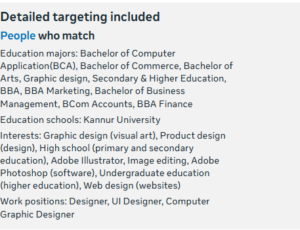
Initially, I had targeted Kannur as the main location and selected the relevant audience and age group for the campaign. I had also excluded nearby districts such as Kozhikode, Kasaragod, and Malappuram because the campaign was specifically intended to focus on the Kannur audience.
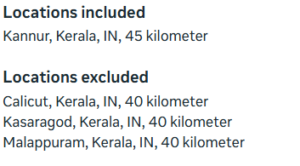
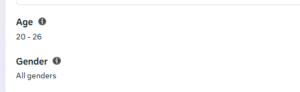
However, while analyzing the campaign data, I noticed delivery patterns that did not completely match my initial targeting expectations.
That is when I started looking deeper into the campaign data.
Finding the Problem Through Breakdown
One of the most useful features I discovered during this process was the Breakdown option in Meta Ads Manager.
Breakdown helped me analyze campaign performance based on different dimensions such as:
- Location
- Age
- Gender
- Other available audience dimensions
This helped me understand where the campaign was actually generating results and where the budget was being spent.
Positive Analysis
Breakdown is useful when a campaign is performing well because it helps identify which segments are generating better results.
For example, if a campaign generates more conversions from a particular location or age group, I can identify that pattern through the data.
This information can then help me make better decisions for future campaigns by giving more attention to the audience segments that are actually producing results.
Negative Analysis
Breakdown is equally useful when a campaign is underperforming.
In my case, I noticed that the campaign was not delivering exactly as I had initially expected. The CPR was high, results were low, and impressions were increasing.
Instead of simply increasing the budget or stopping the campaign, I investigated the delivery data.
I reviewed the location and age breakdowns and identified the areas where the campaign needed better control. I then adjusted the campaign settings and created rules to address the issue.
The Audience Targeting Lesson
For this campaign, my primary age group was 18 to 26, with Kannur as the main location.
The important lesson for me was that setting an audience is not the end of campaign management.
You need to continuously monitor how Meta is delivering the campaign and compare actual performance with your original targeting strategy.
This experience taught me not to blindly trust the initial campaign setup. Data analysis after publishing the campaign is equally important.
The Result
The campaign ran for approximately one week and generated 9 conversions.
Eight conversions may not look like a huge number, but for me, the real value of this campaign was the practical experience I gained.
I learned how to:
- Set up and publish a Meta Ads campaign.
- Monitor campaign performance regularly.
- Analyze Cost per Result.
- Understand impressions and results.
- Use the Breakdown feature.
- Analyze location and age performance.
- Identify inefficient audience delivery patterns.
- Make adjustments based on campaign data.
- Use rules to improve campaign management.
- Learn from actual campaign performance rather than relying only on theory.
What I Learned
This campaign taught me one important lesson:
Running an ad is not the same as managing an ad.
Publishing a campaign is only the beginning. The real work starts after the campaign goes live.
Regular monitoring, data analysis, identifying problems, testing changes, and making decisions based on actual results are what make campaign management effective.
Since this was my first practical Meta Ads experience, I made mistakes, analyzed them, and learned from them. That is something I value more than simply getting a campaign published.
Ad creative strategy



For the OpenTutor Design School Meta Ads campaign, the ad creative was provided by the OpenTutor team. My responsibility was to use the provided creative as part of the campaign strategy and monitor how it performed with the selected audience.
The feed creative was designed to promote the Design School and communicate the key course benefits, making it suitable for reaching potential students through Meta platforms.
My Role in the Creative Strategy
Although the creative was created by the OpenTutor team, I was responsible for incorporating it into the Meta Ads campaign and analyzing its performance after the ad went live.
I monitored important campaign metrics such as:
Cost Per Result (CPR)
Impressions
Results
Audience performance
Location performance
Age-group performance
I also used the Breakdown feature in Meta Ads Manager to understand how the ad was being delivered across different audience segments.
What This Taught Me
This experience helped me understand that successful Meta Ads campaigns are not only about creating attractive creatives.
A good campaign also requires the right audience targeting, campaign setup, monitoring, analysis, and optimization.
Working with a creative provided by the OpenTutor team gave me practical experience in understanding how an existing marketing asset can be used strategically within a paid advertising campaign.
My contribution to this campaign was focused on Meta Ads setup, audience targeting, campaign monitoring, performance analysis, and optimizatio
Conclusion
This OpenTutor Design School campaign was an important learning experience during my internship. Although the campaign generated 9 conversions in one week, the biggest achievement for me was gaining practical experience in analyzing and optimizing a real Meta Ads campaign.
I am still learning and improving my performance marketing skills. My goal is to use these experiences to create better campaigns, improve conversion rates, and make more data-driven advertising decisions in the future.
Thank you for taking the time to read my case study.
This is my real practical experience, and this is what I learned from running my first Meta Ads campaign.
you are searching for best digital marketing strategist in kannur
connect me

Muhammad suhaim k
Muhammad Suhaim K is a passionate Digital Marketing Strategist with 2 years of experience in creating result-driven online marketing campaigns. He specializes in social media marketing, SEO, content strategy, and performance marketing, helping brands improve their online presence and audience engagement. With a creative mindset and data-driven approach, Muhammad Suhaim K is dedicated to delivering impactful digital solutions that support business growth and brand visibility.